Resin identification sensor - List of Manufacturers, Suppliers, Companies and Products | IPROS

Resin identification sensor Product List

1~17 item / All 17 items

Displayed results

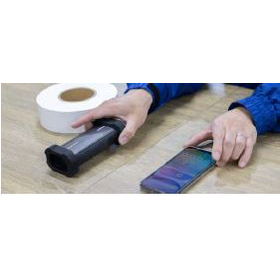
[Use Case] Identification of waste plastic from scrap and leftover materials generated by our factory.

Proper sorting of our company's waste can also serve as a way to appeal to our commitment to the environment!

We would like to introduce a case study utilizing the "Resin Discrimination Handy Sensor" for the identification of waste plastics from scrap materials and offcuts. In this case, waste materials generated in our own factory and offcuts produced during the manufacturing process are being disposed of collectively, leading to a lack of proper sorting. By sorting the waste materials and offcuts, they can be handed over to intermediate processing companies, reducing processing costs and allowing for valuable transactions. [Case Overview] ■ Target Companies: Plastic product manufacturers, package printing manufacturers, electronics manufacturers ■ Issue: Collective disposal of waste materials and offcuts, neglecting sorting ■ Effect: Sorting materials that should be discarded, resulting in cost savings of several million yen *For more details, please refer to the PDF document or feel free to contact us.

  • Other resource recycling
  • Other analytical equipment
  • Resin identification sensor

Added to bookmarks

Bookmarks list

Bookmark has been removed

Bookmarks list

You can't add any more bookmarks

By registering as a member, you can increase the number of bookmarks you can save and organize them with labels.

Free membership registration

[Specific Example] Increased profits through valuable transactions of waste plastics.

A case study of a method for distinguishing valuable materials using a handheld sensor has been standardized!

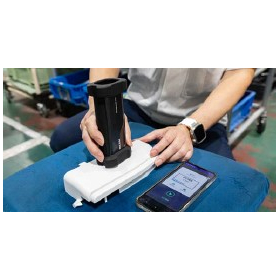
We would like to introduce a case study of the implementation of a "resin identification sensor" at a plastic material manufacturer. At the company, among the waste plastics generated in the factory, those with unknown resin types were uniformly disposed of, as it was difficult to determine whether they could be traded for value, resulting in significant disposal costs. After the introduction of the resin identification sensor, it became possible to identify previously unknown plastics on-site, achieving both an expansion of valuable transactions and a reduction in disposal costs simultaneously. 【Case Overview】 ■ Challenges - Among the waste plastics generated in the factory, it was difficult to determine whether the unknown resins could be traded for value, leading to uniform disposal and significant disposal costs. ■ Effects - It became possible to identify previously unknown plastics on-site, achieving both an expansion of valuable transactions and a reduction in disposal costs. *For more details, please refer to the PDF document or feel free to contact us.

  • others
  • Resin identification sensor

Added to bookmarks

Bookmarks list

Bookmark has been removed

Bookmarks list

You can't add any more bookmarks

By registering as a member, you can increase the number of bookmarks you can save and organize them with labels.

Free membership registration

[Case Study] 90% Recycling Rate of Waste Plastics! Meiwa Packs

Recycling collection rate improved to 90%! Significantly enhanced material identification accuracy for waste plastic films.

We would like to introduce a case study from Meiwa Pax Co., Ltd. that solved the challenges of material identification accuracy for the valuable trading of multi-material waste films and improving recycling rates. The company faced difficulties in separating and collecting waste plastic films that had become leftover materials and scraps, as the material type was not easily identifiable. As a result, valuable trading and recycling became impossible. By introducing the "RICOH Resin Identification Handheld Sensor," the accuracy of polypropylene identification improved, and the collection rate increased to 90%. [Previous Challenges] - Waste plastic films that had undergone processing, such as laminating and printing, could not be identified by material type, making it impossible to separate and collect them for valuable trading or recycling. - The recycling collection rate and valuable trading rate for polypropylene remained around 10%, indicating a need for reform. *For more details, please refer to the PDF document or feel free to contact us.*

  • 2-2.PNG
  • others
  • Resin identification sensor

Added to bookmarks

Bookmarks list

Bookmark has been removed

Bookmarks list

You can't add any more bookmarks

By registering as a member, you can increase the number of bookmarks you can save and organize them with labels.

Free membership registration

Identification of different packaging materials for each supplier <sent for incineration>

By gathering waste plastic materials, we can turn them into valuable resources and improve processing costs!

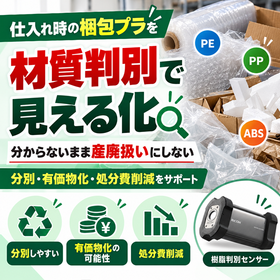
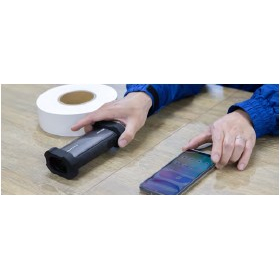
We would like to introduce the utilization proposal for the "Resin Identification Handy Sensor" that we handle. It is effective for issues such as "the types of packaging materials and wrapping materials differ by supplier, but since the materials cannot be identified, we incur disposal costs by sending them for incineration." Identifying the material takes only 2 seconds. By simply pointing the sensor, you can identify the material, allowing for the installation of sorting collection boxes and material checks during collection. [Overview] ■ Issue: The types of packaging materials and wrapping materials differ by supplier, but since the materials cannot be identified, we incur disposal costs by sending them for incineration. ■ Solution: By simply pointing the sensor, you can identify the material, enabling the installation of sorting collection boxes and material checks during collection. *For more details, please refer to the PDF document or feel free to contact us.

  • Other resource recycling
  • Other analytical equipment
  • Resin identification sensor

Added to bookmarks

Bookmarks list

Bookmark has been removed

Bookmarks list

You can't add any more bookmarks

By registering as a member, you can increase the number of bookmarks you can save and organize them with labels.

Free membership registration

Column on Resin Identification Handy Sensor: What is the Circular Economy?

A detailed explanation of the differences with 3R and initiatives in Japan and overseas in a column format!

Due to mass production and mass consumption in modern times, the speed of consumption is increasing to the point where it seems likely to destroy natural resources in the future. Currently, marine resources are gradually being damaged by plastic waste in the ocean. When faced with such a situation, many people will likely feel anxiety and a sense of crisis. In response to these issues, global initiatives such as the SDGs are being implemented. To fundamentally resolve environmental problems, a transition to a circular economy, which is based on the elimination of waste and pollution, is necessary. *For more details on the column, please refer to the related links. For further information, feel free to contact us.*

  • others
  • Resin identification sensor

Added to bookmarks

Bookmarks list

Bookmark has been removed

Bookmarks list

You can't add any more bookmarks

By registering as a member, you can increase the number of bookmarks you can save and organize them with labels.

Free membership registration

[Case Study] Utilizing Sensors for the Valorization of Waste Plastics! Fuji Kasei Co., Ltd.

We will introduce a case where the material identification cost was significantly reduced, allowing for the collection of small amounts of waste plastic!

We would like to introduce a case study of the introduction of the "Ricoh Resin Discrimination Handy Sensor" at Fuji Kasei Co., Ltd., which is engaged in the processing and sales of recycled plastics, the purchase of waste plastics, and the collection and transportation of industrial waste. The company faced high costs for material discrimination of waste plastics, making it difficult to collect small amounts of waste plastics due to profitability concerns. Additionally, it was necessary to burn small amounts of waste plastics for material discrimination, which could produce toxic gases, raising concerns about health risks for the discriminators. With the introduction of the sensor, high-precision discrimination has become possible with easy operation. The need to burn waste plastics for discrimination has also been eliminated, reducing health risks for the discriminators and achieving a reduction in industrial waste and resource recycling. 【Previous Challenges】 - High costs for material discrimination of waste plastics made it difficult to collect small amounts of waste plastics due to profitability concerns. - It was necessary to burn small amounts of waste plastics for material discrimination, but some could produce toxic gases, raising health concerns for the discriminators. - Recyclable waste plastics were also classified as industrial waste. *For more details, please download the PDF or feel free to contact us.*

  • 【導入事例】廃プラスチックの有価物化にセンサーを活用!株式会社富士化成様2.jpg
  • Other resource recycling
  • Other analytical equipment
  • Environmental Survey
  • Resin identification sensor

Added to bookmarks

Bookmarks list

Bookmark has been removed

Bookmarks list

You can't add any more bookmarks

By registering as a member, you can increase the number of bookmarks you can save and organize them with labels.

Free membership registration

Identifying packaging waste plastic of unknown material on-site [Achieved annual savings of 1 million yen]

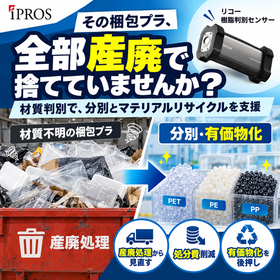
For the concern of incurring high disposal costs due to unknown materials of packaging materials at the time of procurement! We will switch to valuable resale using a sensor that collaborates with smartphones to identify composite resins on-site.

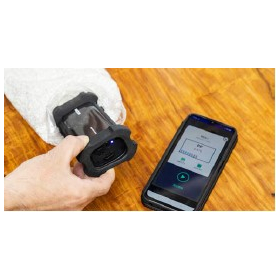
The resin identification handheld sensor is a portable measuring device designed to prevent the rising disposal costs of unknown material packaging plastics brought in during material acceptance. "There’s no way to know what type of resin the supplier uses, so we have no choice but to treat it all as industrial waste..." This device, which is palm-sized and cordless, enables the monetization of waste in such situations. 【Recommended for these issues】 ◆ The material of packaging materials at the time of purchase is unknown, leading to everything being treated as industrial waste. ◆ Measuring bulky waste plastics is difficult due to cables. ◆ Mixed resins result in collection companies refusing to pick them up. <Reasons for choosing this product> - Supports measurement of composite/mixed resins. Connects wirelessly to a smartphone and provides identification results via voice. - Features a setting mode that allows individual registration of proprietary resins, enabling even beginners to identify instantly without confusion. - Visualizes nearby collection trucks through integration with resource circulation navigation, consolidating collection routes to reduce transportation costs. For any inquiries regarding "the ability to identify our own waste" or "optimization of collection routes," please contact us via the "Web Inquiry"! For case studies, please refer to the "Catalog Download." We will also be exhibiting at trade shows, so we will introduce the actual device at the venue.

  • イプロスメルマガ画像?.png
  • イプロスメルマガ画像?.png
  • Other resource recycling
  • Collection and transportation
  • Resin identification sensor

Added to bookmarks

Bookmarks list

Bookmark has been removed

Bookmarks list

You can't add any more bookmarks

By registering as a member, you can increase the number of bookmarks you can save and organize them with labels.

Free membership registration

[Case Study] Contributing to Horizontal Recycling of Label Backing! Nichiei Shinka Co., Ltd.

The RICOH resin identification handheld sensor plays an important role in the "Resource Recycling Project"!

We would like to introduce a case study of the implementation of the "RICOH Resin Identification Handheld Sensor" at Nichirei Shinkawa Co., Ltd. The backing paper for the company's main products, seal and label materials, is a composite material of paper and resin, which has been discarded and incinerated in large quantities without being collected and reused as a resource. In response, we launched the horizontal recycling "Resource Circulation Project" for label backing paper. Our product plays a crucial role in accurately identifying the materials of the label backing paper. 【Case Overview】 ■Challenges - As society as a whole works towards achieving the goals of the SDGs, label backing paper has traditionally been discarded in large quantities without recycling, highlighting the need to establish a resource circulation system. - To achieve a high level of recycling, it was necessary to accurately determine whether the collected "recycling-specific backing paper" is the unique material "Kamishine." *For more details, please refer to the PDF document or feel free to contact us.

  • 【樹脂判別ハンディセンサー導入事例】日榮新化株式会社様2.JPG
  • others
  • Resin identification sensor

Added to bookmarks

Bookmarks list

Bookmark has been removed

Bookmarks list

You can't add any more bookmarks

By registering as a member, you can increase the number of bookmarks you can save and organize them with labels.

Free membership registration

[Case Study] Achieving Waste Plastic Separation at Construction Sites! Nishimatsu Construction Co., Ltd.

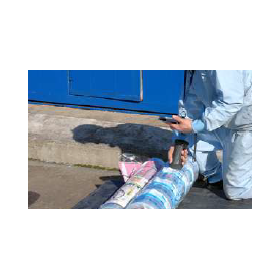
The introduction of the RICOH handheld sensor has made it possible to sort waste plastic at construction sites! We aim to improve the material recycling rate through diligent sorting activities.

We would like to introduce a case study of the introduction of the "Ricoh Resin Identification Handy Sensor" at Nishimatsu Construction Co., Ltd. Since the fiscal year 2015, the company has formulated a medium-term management plan related to environmental management, focusing on three pillars: "CO2 reduction in business activities," "biodiversity conservation," and "3R for construction waste." They have been actively promoting specific activities on-site. In 2016, they received certification as an "Eco-First Company" and have been exploring various initiatives as a leading company in environmental efforts within the construction industry. Here, we introduce their initiative for sorting waste plastics implemented at the Shiga Konan branch, which is a construction site. 【Previous Challenges】 ■ At construction sites, waste plastics were disposed of in a single container and collected for disposal without any efforts towards recycling. *For more details, please refer to the PDF document or feel free to contact us.

  • Other resource recycling
  • Other analytical equipment
  • Environmental Survey
  • Resin identification sensor

Added to bookmarks

Bookmarks list

Bookmark has been removed

Bookmarks list

You can't add any more bookmarks

By registering as a member, you can increase the number of bookmarks you can save and organize them with labels.

Free membership registration

[Case Study] Cost Reduction through the Valorization of Waste Plastics! Etria Co., Ltd.

We will introduce a case where it became possible to identify the material of waste plastics, leading to reduced processing costs and the creation of profits from the sale of valuable materials!

We would like to introduce a case study of the introduction of the "Ricoh Resin Identification Handheld Sensor" at Etria Co., Ltd., which develops and produces multifunction devices and printers. At the company's Gotemba facility, the monetization of waste plastics contained in the mixed waste discharged from the site was not progressing, making it difficult to promote efforts toward material recycling. With the introduction of the sensor, it became possible to identify the material of waste plastics, leading to significant cost reductions through reduced processing costs and profits from the sale of valuable materials. 【Previous Challenges】 - Unable to identify the materials of some waste plastics, resulting in waste disposal costs. - Difficulties in negotiating purchases with recycling companies due to a lack of specialized knowledge and technology for material identification. - The monetization of waste plastics was not progressing, making it difficult to promote efforts toward material recycling. *For more details, please download the PDF or feel free to contact us.

  • 【導入事例】廃プラスチックの有価物化でコスト削減!エトリア株式会社様2.jpg
  • 【導入事例】廃プラスチックの有価物化でコスト削減!エトリア株式会社様3.jpg
  • Other resource recycling
  • Other analytical equipment
  • Environmental Survey
  • Resin identification sensor

Added to bookmarks

Bookmarks list

Bookmark has been removed

Bookmarks list

You can't add any more bookmarks

By registering as a member, you can increase the number of bookmarks you can save and organize them with labels.

Free membership registration

[Case Study] Aiming for Zero Waste of Label Backing! Nichiei Shinka Co., Ltd.

We will introduce a case where it has become easy and efficient to identify the material of the collected "recycling-only backing paper"!

We would like to introduce a case where Nichiei Shinka Co., Ltd., which develops adhesive films and coating films, has implemented the "Ricoh Resin Identification Handy Sensor." The backing material for the company's main products, seal and label materials, is a composite of paper and resin, which has been discarded and incinerated in large quantities without being collected and reused as a resource. By introducing the sensor, it has become easy and efficient to identify the material of the collected "recycling-specific backing," playing an essential role in the establishment of the "Resource Circulation Project" scheme. 【Previous Challenges】 ■ The label backing has been discarded in large quantities without recycling, highlighting the need to establish a resource circulation system. ■ There was a need to accurately determine whether the collected "recycling-specific backing" is made of the unique material "Kamishine." *For more details, please download the PDF or feel free to contact us.

  • 【導入事例】ラベル台紙廃棄ゼロを目指す!日榮新化株式会社様3.jpg
  • Other resource recycling
  • Other analytical equipment
  • Environmental Survey
  • Resin identification sensor

Added to bookmarks

Bookmarks list

Bookmark has been removed

Bookmarks list

You can't add any more bookmarks

By registering as a member, you can increase the number of bookmarks you can save and organize them with labels.

Free membership registration

[Specific Example] Streamlining Inspection Operations and Reducing Outsourcing Costs

Utilizing handheld sensors for sampling inspections! Checking on-site whether the main component of plastic is used according to standards.

We would like to introduce a case study of the implementation of a "resin identification sensor" at a plastic product manufacturer. The company conducted random inspections of products manufactured overseas after they were received and outsourced quality checks, which led to inefficiencies in inspection operations and high costs. After the introduction of the resin identification sensor, the company internalized the random inspections and quality checks, achieving greater operational efficiency. The lead time to shipment and inventory days were reduced. 【Case Overview】 ■ Challenges - After receiving products manufactured overseas, the company conducted random inspections and outsourced quality checks, resulting in inefficiencies in inspection operations and high costs. ■ Effects - Internalization of random inspections and quality checks led to improved operational efficiency. - Reduction in lead time to shipment and inventory days. *For more details, please refer to the PDF document or feel free to contact us.

  • others
  • Resin identification sensor

Added to bookmarks

Bookmarks list

Bookmark has been removed

Bookmarks list

You can't add any more bookmarks

By registering as a member, you can increase the number of bookmarks you can save and organize them with labels.

Free membership registration

Specific example: Streamlining purchasing operations and reducing analysis time.

On-site purchasing decisions using a handheld sensor! Estimates provided on the spot based on resin type.

We would like to introduce a case study of the implementation of a "resin identification sensor" by an intermediate processing company. In this company, when collecting waste plastics, analysis was required for unknown resins, which meant they had to take them back to their facility for purchasing decisions. The labor costs and time associated with transportation and analysis were significant challenges. After the introduction of the resin identification sensor, they were able to respond quickly to purchasing decisions and provide estimates at the customer's site without making them wait, achieving standardization of staff skills and improving customer satisfaction. 【Case Overview】 ■ Challenges - When collecting waste plastics, analysis was required for unknown resins, necessitating taking them back for purchasing decisions. ■ Effects - Quick response to purchasing decisions and estimate provision at the customer's site without making them wait. - Achieved standardization of staff skills and improved customer satisfaction. *For more details, please refer to the PDF document or feel free to contact us.

  • others
  • Resin identification sensor

Added to bookmarks

Bookmarks list

Bookmark has been removed

Bookmarks list

You can't add any more bookmarks

By registering as a member, you can increase the number of bookmarks you can save and organize them with labels.

Free membership registration

Material identification for purchasing waste plastic.

If purchasing decisions can be made on-site, it will reduce inspection costs and increase opportunities for resource acquisition!

We would like to introduce the utilization proposal for the "Resin Identification Handy Sensor" that we handle. It is effective for challenges such as "using external organizations due to lack of know-how in material identification" and "unable to increase personnel because technical skills are required." Since sales representatives can determine on-site whether purchases are possible, it reduces the costs and man-hours associated with returning for inspection. Additionally, it eliminates the need for skilled workers, allowing for an increase in personnel and ensuring that opportunities for resource acquisition are not missed. [Overview] ■ Challenge: Sales representatives cannot determine on-site whether purchases are possible. ■ Solution - Reduces costs and man-hours associated with returning for inspection. - Allows for an increase in personnel, ensuring that opportunities for resource acquisition are not missed. *For more details, please refer to the PDF document or feel free to contact us.

  • others
  • Resin identification sensor

Added to bookmarks

Bookmarks list

Bookmark has been removed

Bookmarks list

You can't add any more bookmarks

By registering as a member, you can increase the number of bookmarks you can save and organize them with labels.

Free membership registration

Material identification at recycling sites

If anyone can identify items at the recycling site, we can increase personnel and expand processing capacity!

We would like to introduce the utilization proposal for the "Resin Identification Handy Sensor" that we handle. It is effective for challenges such as "We cannot increase personnel because technical skills are required" and "We use external organizations due to a lack of know-how in material identification." Even amateurs can identify materials, which reduces inspection costs and labor hours. In addition to skilled workers, we can increase personnel, allowing for an increase in handling volume. 【Overview】 ■ Challenges - Use of external organizations due to lack of know-how in material identification - Identification is not possible for anyone other than skilled workers ■ Solutions - Reduction of inspection costs and labor hours - Ability to increase handling volume by adding personnel in addition to skilled workers *For more details, please refer to the PDF document or feel free to contact us.

  • others
  • Resin identification sensor

Added to bookmarks

Bookmarks list

Bookmark has been removed

Bookmarks list

You can't add any more bookmarks

By registering as a member, you can increase the number of bookmarks you can save and organize them with labels.

Free membership registration

[Usage Example] Distinguishing between different packaging materials for each supplier.

Not based on intuition or experience, but using sensors for identification! A case where waste disposal costs were easily improved.

We would like to introduce a case study on the use of the "Resin Identification Handheld Sensor" for distinguishing packaging materials. The types of packaging materials handled vary by supplier, but due to the vast quantity and the labor-intensive sorting process, there are cases where they are simply discarded. By just applying the sensor, the material can be identified instantly and accurately. With data accumulation, trends in the materials used by each supplier can also be understood, enabling valuable transactions that were previously impossible. 【Case Overview】 ■ Target Companies: Food manufacturers, automotive manufacturers, electronics manufacturers ■ Challenge: A wide variety of materials from each supplier, unable to identify in-house ■ Effect: Materials that could not be identified before can be specified in just 2 seconds *For more details, please refer to the PDF document or feel free to contact us.

  • others
  • Resin identification sensor

Added to bookmarks

Bookmarks list

Bookmark has been removed

Bookmarks list

You can't add any more bookmarks

By registering as a member, you can increase the number of bookmarks you can save and organize them with labels.

Free membership registration

How about capturing the hearts of the younger generation through experiential environmental learning utilizing technology?

Learn actively and joyfully so that you can apply it to your daily actions! Here are some suggestions for utilizing our sensors.

We would like to introduce the utilization proposal for the "Resin Identification Handy Sensor" that we handle. It is effective for challenges such as "environmental learning centered on lectures feels distant" and "board writing and slides tend to lead to one-sided lectures." By holding the sensor and experiencing sorting, knowledge acquisition is accelerated. Awareness of the reality that recyclable materials are being discarded and the ease of sorting due to technological advancements will increase consciousness towards environmental conservation. 【Overview】 ■Challenges - Environmental learning centered on lectures feels distant - Board writing and slides tend to lead to one-sided lectures ■Solutions - Accelerated knowledge acquisition - Increased awareness of environmental conservation *For more details, please refer to the PDF materials or feel free to contact us.

  • others
  • Resin identification sensor

Added to bookmarks

Bookmarks list

Bookmark has been removed

Bookmarks list

You can't add any more bookmarks

By registering as a member, you can increase the number of bookmarks you can save and organize them with labels.

Free membership registration